


You traded the office cubicle for a laptop and a dream. Now you find that your boss is a jerk and the employee (you) is constantly distracted. Being self-employed is like being the captain of a ship, the cook, and the person scrubbing the deck all at once. If you do not find a way to stay organized, you will spend more time treading water than actually moving forward.
Productivity for a freelancer is not about working more hours. It is about making sure the hours you do work actually count. Many people think that freedom means working whenever you want. The truth? Freedom without a system is just a fast track to burnout. Here is how to stop the cycle of endless scrolling and start getting paid for your craft.
1. Build Your Digital Toolbox Early

One of the biggest mistakes new freelancers make is trying to manage everything with a pen and a notebook. While that works for a grocery list, it fails when you have three clients asking for updates at the same time. You are an expert in your craft, but you are likely an amateur in your administration. That gap is where your profit disappears.
Think of freelance productivity tools as your virtual assistant. You would not try to build a house with just a hammer. You need a level, a saw, and a drill. In the freelance world, these tools handle the business of being in business. They let you focus on the work that people actually pay you for.
A common misconception is that you need to spend hundreds of dollars on software. You do not. Many of the best productivity tools for freelancers have free versions that are more than enough for a one person show. The goal is to automate the boring stuff. Think about generating invoices, tracking your hours, or managing your files. This keeps your brain fresh for the creative tasks. If you are still doing your math on a napkin, you are leaking money. Tools like ProToolScout were built specifically to get you out of this paper hell by making the technical stuff invisible.
2. Separate the “Doing” from the “Managing”
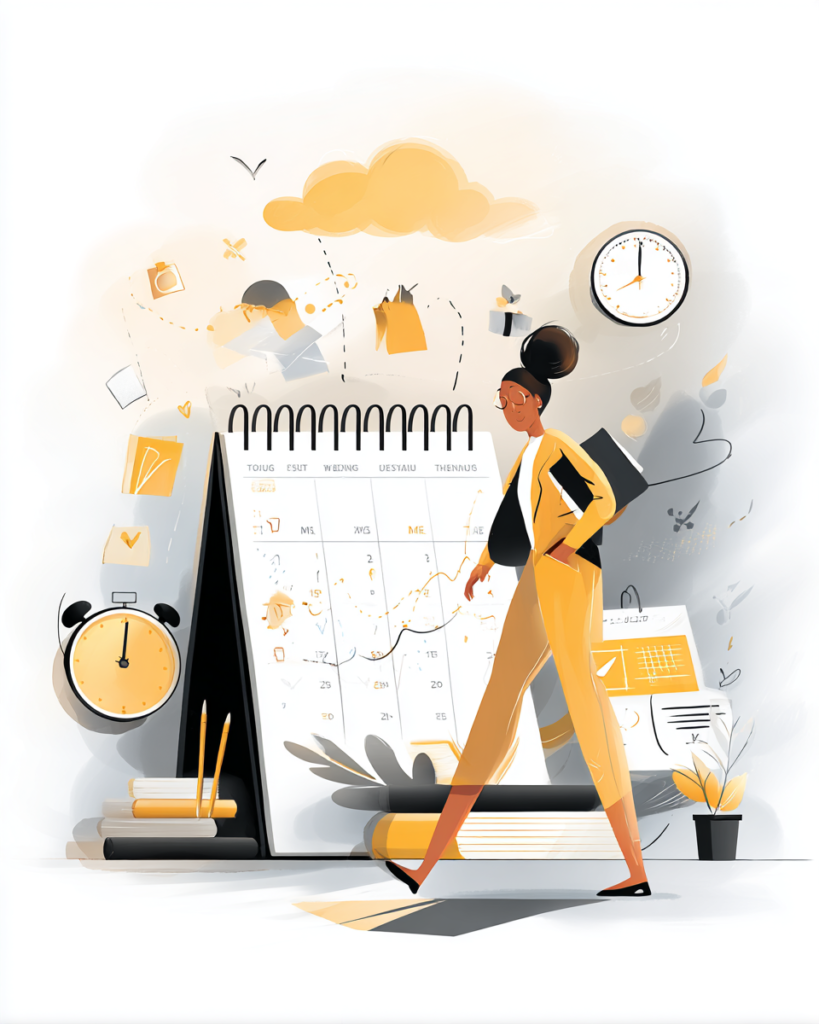
When you work in a traditional company, there is usually a project manager who tells you what to do and when to do it. When you go solo, you have to become your own freelance production manager. This is a role most people ignore until their deadlines are screaming at them.
The problem is that our brains are not very good at switching between Manager Mode and Maker Mode. Manager Mode is about planning, organizing, and looking at the big picture. Maker Mode is about deep focus and doing the actual work. If you stop every ten minutes to check an email or tweak a calendar, you break your flow. It is like trying to drive a car while constantly jumping out to check the tire pressure. You will never get up to speed.
The Tip: Spend the first 15 minutes of your Monday being the manager. Plan your week. Set your deadlines. Look at your bank account. Then, for the rest of the day, put on your Maker hat and just execute. Treating your schedule like a set of train tracks helps prevent you from wandering off into the woods of procrastination. When the tracks are laid down, you just have to keep the engine moving.
3. Master the Art of the “Digital Paper Trail”
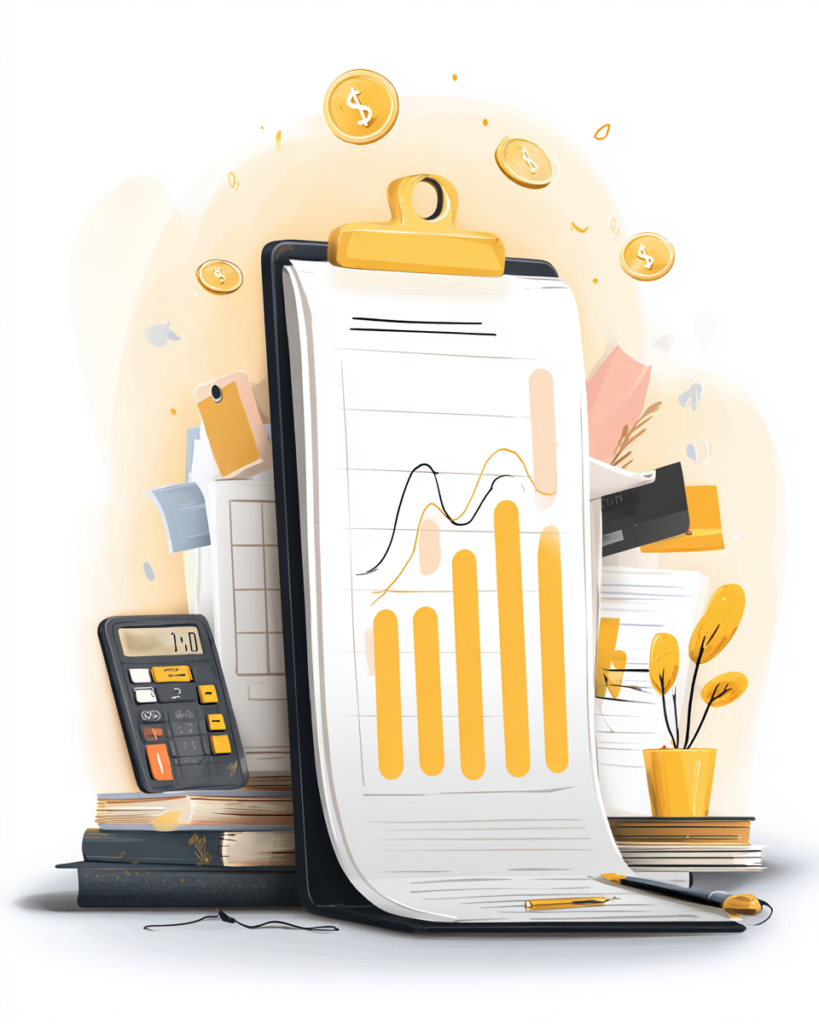
If you are looking for how to start freelancing tips, this is the most important one: track every single thing. In a regular job, someone else handles the taxes and the equipment costs. Now, that is your job. Most freelancers ignore their expenses until tax season. That is like trying to fix a leak in your roof while it is already pouring rain. It is too late, and you are going to get soaked.
Consider the impact of expense tracking tools on project costs. On many freelancing platforms, it is easy to forget that fees eat into your profit. There are platform fees, software subscriptions, and your internet bill. If you do not track these costs, you might find that the big project you just finished actually paid you less than minimum wage after expenses.
You need to see where the money goes. Think of your business like a bucket. Your work pours water (money) into the bucket. But if the bucket has holes (untracked expenses and fees), you will never fill it up. Use a tool that tracks every cent so you know exactly how much to charge for your next bid. When you understand your costs, you can price your services with confidence instead of just guessing.
4. Treat Your Energy Like a Battery

We often think of time as our most valuable resource. That is a mistake. Your most valuable resource is actually your energy. You can have eight hours of free time, but if you are mentally exhausted, you will get nothing done. You will just stare at your screen and move your mouse around.
Most people have a peak time. This is a window of two or three hours where they are sharpest. For some, it is 6:00 AM. For others, it is 10:00 PM. You need to know when your internal battery is at 100 percent.
The Tip: Guard your peak hours. Do not use your best brainpower for administrative tasks like answering emails or filing receipts. Save those low energy tasks for when your battery is at ten percent. Use your full battery for the hardest, most complex part of your project. If you are a writer, write when you are sharp. If you are a designer, do your heavy lifting when your eyes are fresh. Don’t waste your best hours on $10 tasks. Save them for the $100 tasks.
5. Curate Your Environment
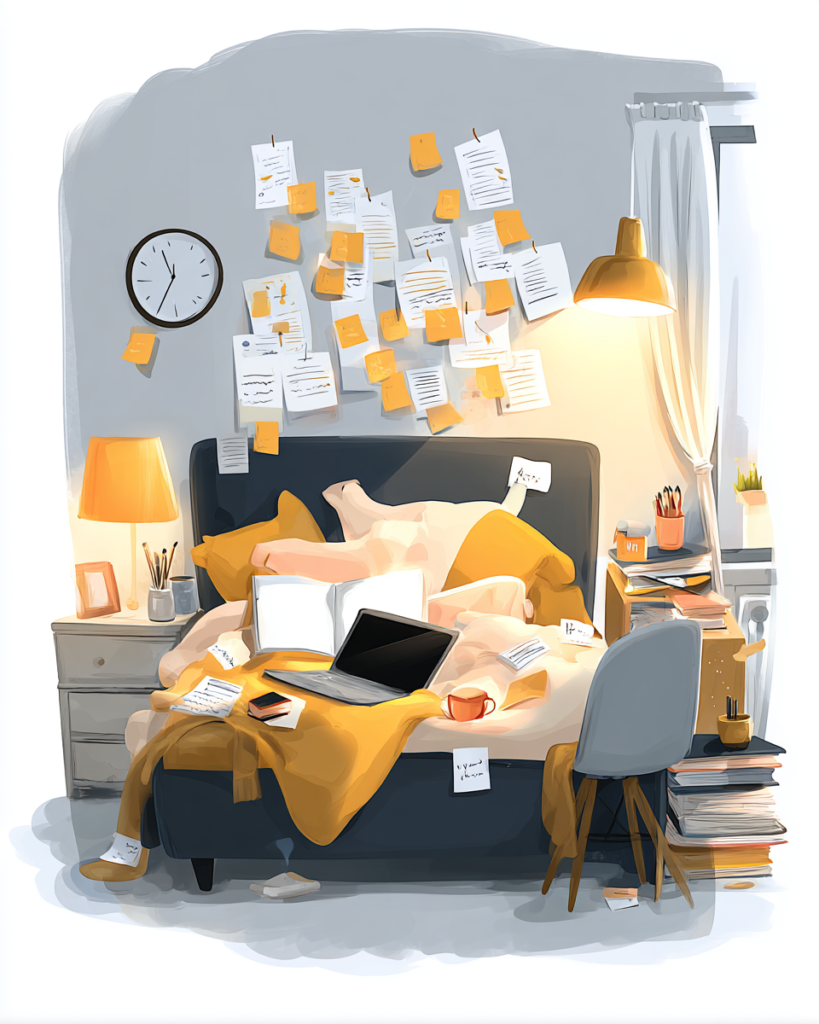
The “working from bed” dream is usually a productivity nightmare. Your brain is a master of association. It associates your bed with sleep and your couch with Netflix. Trying to write a complex proposal in those spots is like trying to have a serious business meeting in the middle of a loud playground. It just does not work.
You do not need a fancy home office with a mahogany desk. You just need a work zone. Even if it is just a specific chair at your kitchen table, only sit there when you are working. When you are done, leave that spot. This physical boundary creates a mental trigger. It tells your brain it is time to be a professional now.
This also applies to your digital environment. If your desktop is a mess of random files and your browser has 40 tabs open, your brain will feel cluttered. Clean your digital desk every evening. It takes five minutes, but it allows you to start the next morning with a clear head.
6. Stop the “Multitasking” Lie

One of the most dangerous freelancer tips you will hear is that you need to be a master multitasker. That is a lie. Multitasking is just the ability to screw up several things at once. Every time you switch from a design project to an email and back again, your brain pays a switching tax. It takes several minutes to get back to the same level of focus you had before the interruption.
Imagine you are a chef. You can’t cook a five course meal if you are also trying to paint the kitchen and answer the phone at the same time. Something is going to burn.
The Tip: Use “Time Blocking.” Give yourself 90 minutes of pure, uninterrupted work on one task. Turn off your phone. Close your social media tabs. You will be shocked at how much more you get done in 90 focused minutes than in five hours of jumping between tasks. Focus is a muscle. The more you use it, the stronger it gets. Start small, but be consistent.
7. Know When to Close the Laptop
The biggest risk of being self-employed is not that you won’t work enough. It is that you will never stop working. When your office is also your living room, the lines get blurry. You check emails at dinner. You think about projects while you are in the shower. Burnout is the silent killer of freelance careers. If you do not set a closing time, you will eventually start to resent your work.
Productivity requires rest. Think of it like a professional athlete. They do not sprint for 24 hours straight. They train hard, then they recover hard. Recovery is part of the training.
Set a firm time every day when the office closes. Put your laptop in a drawer. Turn off your work notifications. Reclaiming your personal time is not just good for your health. It makes you sharper and faster when you start знову the next morning. You are a marathon runner, not a sprinter. Pace yourself so you can stay in the game for the long haul.
The Real Cost of Being “Always On”
Many freelancers wear their “hustle” like a badge of honor. They brag about working 14 hour days and skipping weekends. But if you look closely at their work, it is often full of mistakes. Their creativity is dry. They are essentially running on fumes.
Real productivity is about results, not hours spent sitting in a chair. By using freelance productivity tools, you can cut your admin time in half. By acting as your own freelance production manager, you can ensure you are working on the right things at the right time. This is how you build a sustainable business instead of just a stressful hobby.
Common Misconceptions About Freelance Success

People often think that successful freelancers have some secret “discipline” gene. They don’t. They just have better systems. They don’t rely on willpower because willpower is a limited resource. Instead, they rely on habits and tools.
Another misconception is that you need to be “connected” 24/7 to keep clients happy. In reality, clients respect boundaries. If you tell a client you respond to emails between 9 AM and 5 PM, they will adapt. If you answer them at 2 AM, you are teaching them that you are always available. You are creating your own prison.
Why Small Changes Lead to Big Profits

You don’t need to change your entire life overnight. Start with one tip. Maybe this week you just focus on tracking your expenses more accurately to see the impact of expense tracking tools on project costs. Or maybe you just commit to one 90 minute block of focused work each morning.
Over a year, these small improvements compound. You become faster. Your bids become more accurate. Your stress levels drop. That is the true goal of productivity. It is not about doing more work. It is about having more life.
Being a freelancer does not mean you have to be a tech genius or a workaholic. It just means you need a system. Stop the paper hell. Stop the endless guessing. By using the right tools and respecting your own boundaries, you can actually enjoy the freedom you started this journey for.
Your work is important. Your time is valuable. Treat them that way.
Ready to stop the chaos and start billing like a pro?