


It is 2026, and the cost of doing business has never been higher. If you are still charging the same rates you used in 2022, you are not just losing money. You are slowly going out of business.
The “paperwork hell” we talk about at ProToolScout usually starts with a bad pricing strategy. You spend your day crawling through crawlspaces and your nights fighting with a calculator at the dinner table. It is a cycle that leads straight to burnout.
Pricing is not a guess. It is math. Whether you are a master plumber or a general contractor, you need to understand the difference between plumbing service call fees (your trip charge) and your plumbing rates per hour.
This guide will show you exactly how to set those numbers so you can stop working for free and start getting home on time.
The Reality Check: What it Costs to Exist in 2026
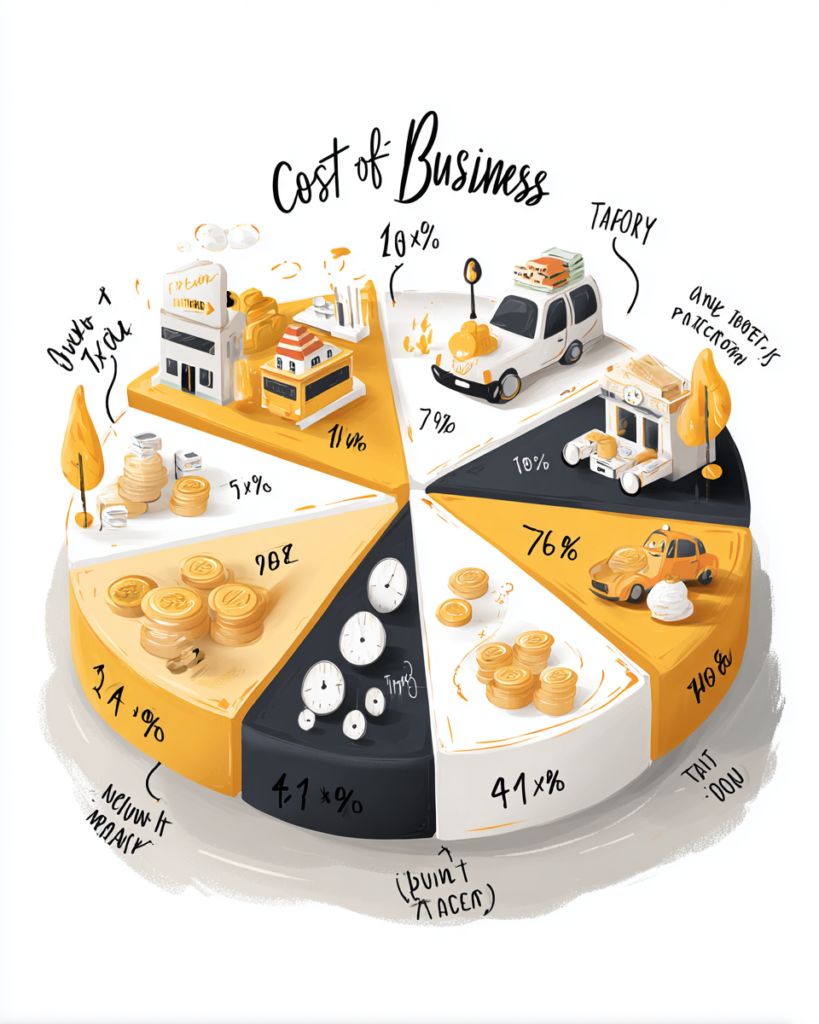
Before we touch a calculator, we have to look at your “materials.” In a service business, your materials are your overhead. If you don’t know these numbers, your hourly rate is just a random number.
Approximate Annual “Materials” (Overhead) List:
- The Truck: Payment, insurance, and maintenance ($12,000 to $18,000).
- Fuel: At 2026 prices, this is a major leak in your bucket ($5,000 to $8,000).
- Insurance: General liability and workers’ comp ($3,000 to $7,000).
- Tools & Tech: Software like ProToolScout, replacement drills, and specialty kits ($2,500 to $5,000).
- The “Admin Tax”: The time you spend on bids, taxes, and phone calls ($10,000 in lost billable time).
Difficulty Assessment: 3/5. The math is simple, but the honesty is hard. You have to be willing to look at your bank statements and realize how much you are actually spending just to keep the van on the road.
Step 1: Calculate Your “Cost to Breathe”
Time Estimate: 2 hours
You need to know your “Break-Even” number. This is the amount of money you need to make every single hour just to keep the lights on.
- Total your annual overhead. Add up every business expense from the list above.
- Determine your billable hours. You are not working 40 billable hours a week. You are driving, talking to customers, and buying parts. A realistic number is 1,200 billable hours per year.
- Do the math. Divide your total overhead by 1,200.
If your overhead is $60,000, your cost to breathe is $50 per hour. That means if you charge $50 an hour, you are making exactly zero dollars in profit. You are just paying your bills.
Step 2: Setting Your Plumbing Service Call Fees (The Trip Charge)
Time Estimate: 30 minutes

The contractor trip charge is the most misunderstood part of pricing. Some guys call it a “diagnostic fee.” Others call it a “service fee.” Whatever you call it, it must cover three things: your travel time, your fuel, and the “opportunity cost” of not being at another job.
In 2026, the average plumbing service call fees range from $99 to $185, depending on your location.
The Formula: (Your Hourly Rate / 2) + (Average Fuel Cost per Trip) + (Small Profit Margin) = Trip Charge.
Common Mistake: Applying the trip charge toward the repair. Look, you didn’t drive to the customer’s house for fun. You used your fuel and your time. If you waive the trip charge when they hire you, you are essentially working for free for the first 45 minutes. In 2026, that is a recipe for resenteeism – staying at a job while feeling a deep sense of resentment because you aren’t making money.
Step 3: Determining Your Plumbing Rates per Hour
Time Estimate: 1 hour
Now that you know your break-even cost ($50 in our example), you need to add your “Living Wage” and your “Business Profit.”
- Living Wage: How much do you want to take home before taxes? Let’s say $80,000 a year. ($80,000 / 1,200 hours = $66 per hour).
- Business Profit: Your business needs its own money to grow. Aim for 20%.
- The Total: $50 (Breakeven) + $66 (Living Wage) = $116. Add 20% for profit, and your plumbing rates per hour should be roughly $140.
The 2026 Reality: Master plumber hourly rates in major markets are currently hitting $150 to $250 per hour. If you are charging $85, you are essentially a hobbyist, not a business owner.
Step 4: Using a Plumbing Cost Calculator to Automate

Time Estimate: Ongoing
You cannot redo this math for every single bid. That is why you use a plumbing cost calculator or a dedicated app like ProToolScout.
When you sit in your truck after looking at a job, you should be able to tap in your labor hours and have the software automatically add your contractor trip charge and your overhead. This ensures that you never “forget” to charge for your time.
Common Pitfalls to Avoid in 2026
1. The “Race to the Bottom”
You might be tempted to lower your price because “the guy down the street” is cheaper. Here is the truth: the guy down the street is probably about to go bankrupt. You cannot compete with a guy who doesn’t pay for insurance or proper tools. High-quality customers in 2026 want reliability, and they know that reliability costs money.
2. Ignoring “Quiet Cracking”
If you don’t charge enough, you will try to make up for it by working 80 hours a week. This leads to quiet cracking – a state where you are still functional and doing the work, but your internal resources are completely spent. Eventually, you will make a mistake on a job that costs you more than all your “savings” combined.
3. Fear of the “No”
Many contractors are afraid to tell a customer that the service call fee is $150. But here is the secret: a customer who complains about a $150 service fee will also complain about the $2,000 water heater replacement. By standing firm on your trip charge, you filter out the “tire kickers” and save your energy for the jobs that actually pay.
Final Difficulty Assessment
The hardest part of this entire process is the psychological shift. You have to stop thinking like a “guy with a wrench” and start thinking like a “business owner with a fleet.”
- Math: Easy.
- Execution: Medium.
- Confidence: Hard.

Your expertise is worth more than the physical labor you do. You are being paid for the ten years it took you to learn how to fix a leak in ten minutes.
In 2026, transparency is your best sales tool. Use a plumbing estimate template that clearly breaks down these costs. When a customer sees a professional, branded quote that explains the trip charge and the hourly rate, they feel a sense of security. They know they aren’t being scammed by a guy making up numbers on the fly.
Stop guessing. Start calculating. Get your life back.
Ready to automate your pricing?
and build your first professional bid in 60 seconds.